
Introduction
There are two Lionel Messis. There is the one we all know: the ethereal genius on the pitch, a player who seems to move with a different set of rules, whose close control and dribbling are not just a skill but a form of art. Then, there is the other Messi—the quiet, reserved man who shuns the spotlight, who carries the hopes of a nation on his shoulders, and who for years battled the ghosts of unfulfilled international glory. To understand the phenomenon is to understand both sides of this story. This is not a simple timeline of trophies and goals; it is a deep dive into the journey of a shy boy from Rosario who fought against every odd to become arguably the greatest player to ever grace the game.
The Small Beginnings of a Big Dream: Childhood in Rosario
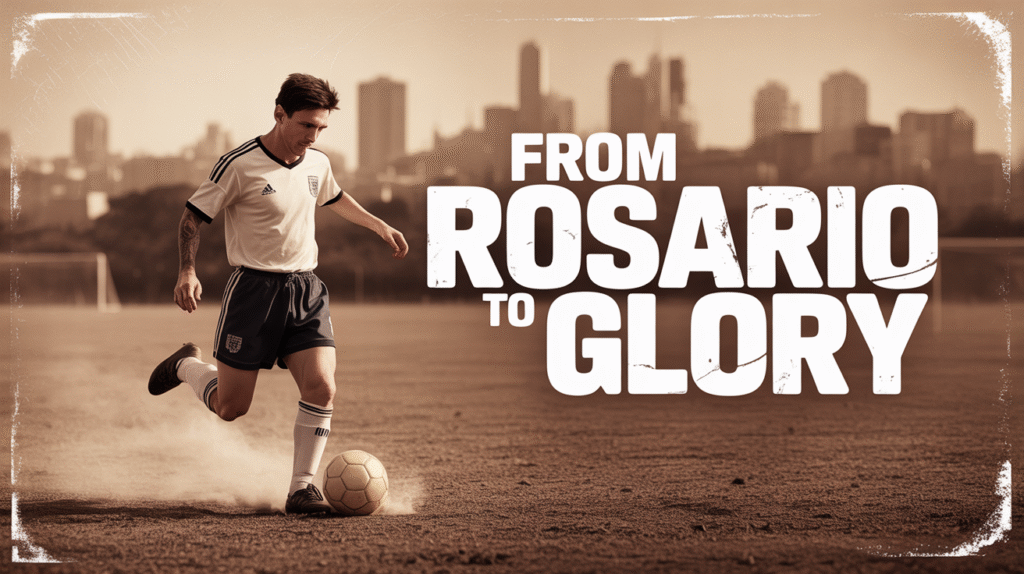
Lionel Andrés Messi was born on June 24, 1987, in Rosario, Santa Fe Province, Argentina. From an early age, it was clear he was different. The boy, nicknamed “Leo,” was a football fanatic, often playing with his older brothers and cousins, unfazed by their size and age difference. His talent was raw and undeniable, a natural gift that seemed to flow through him effortlessly. His grandmother, Celia, was his biggest supporter, the one who would take him to his matches and who believed in him more than anyone. Even today, every time Messi scores a goal, he looks up and points to the sky, a poignant tribute to the woman who first saw his greatness.
His path to professional football, however, was not a fairy tale. At the age of ten, Messi was diagnosed with a growth hormone deficiency. The treatment was expensive, costing hundreds of dollars a month, a burden his working-class family simply could not afford. Local clubs were hesitant to invest, and it seemed his dreams might be over before they had a chance to truly begin. It was a heartbreaking chapter in his life, one that could have broken his spirit. But it was also the moment that his unyielding determination was forged.
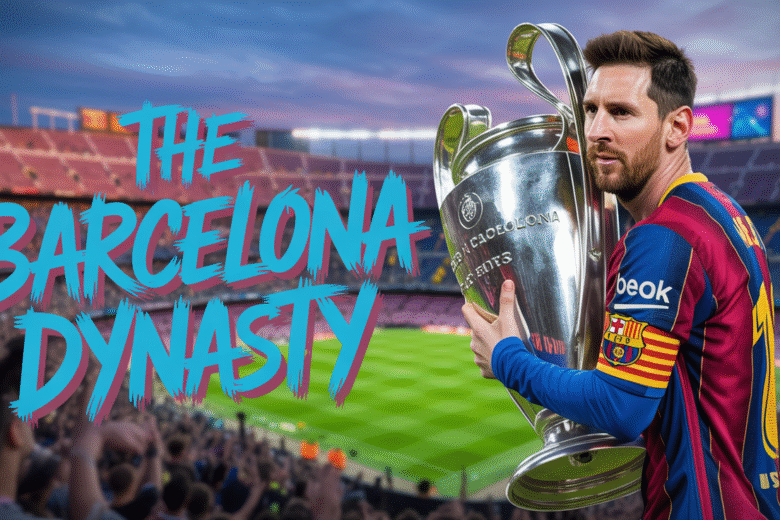
The Barcelona Chapter: A New Home and an Unmatched Dynasty (2000-2021)
At the age of 13, a beacon of hope appeared. Carles Rexach, the sporting director of FC Barcelona, heard about the prodigious talent and, after seeing him play, was so impressed that he offered to sign him on a napkin—a famous story that has now entered football folklore. Barcelona not only offered him a place in their prestigious “La Masia” youth academy but also agreed to pay for his medical treatment. It was a life-altering decision, and the Messi family moved across the Atlantic, leaving their home for a new life in Spain.
At La Masia, Messi didn’t just train; he mastered the game. He grew physically and mentally, and his unique style—that low center of gravity, the ball seemingly glued to his foot, the ability to weave through defenders as if they weren’t even there—was refined to perfection. His debut for the senior team came in 2004, and from that moment on, a new era began.
His early years at Barcelona were spent learning from legends like Ronaldinho and Deco. He was the quiet apprentice, but his talent was impossible to ignore. His true ascension came with the arrival of Pep Guardiola in 2008. Under Guardiola’s tactical genius, Messi was deployed in a “false nine” position, a role that revolutionized modern football. It was a perfect storm of a visionary coach, an unparalleled talent, and a team of generational players like Xavi and Iniesta. Together, they created a dynasty, winning a historic sextuple in 2009.
For over a decade, Messi was the heart and soul of Barcelona. He broke every goal-scoring and assist record imaginable, becoming the club’s all-time leading scorer with an astonishing 672 goals. He won four Champions League titles and a record ten La Liga titles. His six Ballon d’Or awards with the club were a testament to his consistent, otherworldly brilliance. His genius was not just in scoring goals but in orchestrating the entire attack. He was a goal-scorer, a playmaker, and a dribbler all in one, a combination of skills that had never been seen before.
A New Era and a Shifting Landscape: Paris and Miami
The football world was stunned in 2021 when, due to financial difficulties at Barcelona, Messi was forced to leave the club he had called home for two decades. The image of him breaking down in tears at his farewell press conference was a powerful reminder that beyond the fame and money, there was a man with a deep emotional connection to his club. His move to Paris Saint-Germain was a new challenge, and while he won two Ligue 1 titles, the team’s failure to win the Champions League meant the move was, in many ways, an unfulfilled quest.
His move to Inter Miami in Major League Soccer in 2023 was another seismic shift. It was a signal that the final chapters of his club career would be about legacy, a final act in a new part of the world, and a chance to bring his genius to an audience hungry for top-tier football.
The Weight of a Nation: The Argentina Story
For a long time, the narrative around Messi was that he could do everything for his club but couldn’t replicate it for his country. The pressure on him was immense. Argentina had not won a major international trophy since 1993, and Messi was expected to be the one to deliver it. He suffered heartbreak after heartbreak, losing four major finals with the national team, including the 2014 World Cup final. The image of him looking at the World Cup trophy from a distance became a symbol of his career.
But the narrative finally changed. After years of disappointment, he led Argentina to a Copa América victory in 2021, a monumental win that ended the national team’s 28-year trophy drought. You could see the raw emotion pour out of him; the relief was palpable.
This win set the stage for the ultimate triumph. At the 2022 FIFA World Cup in Qatar, Messi played with a fire and a passion that was a joy to behold. It was his final chance at the one trophy that had eluded him, the one piece of silverware that would cement his legacy. The tournament was an epic story, filled with twists and turns. In the final, he scored twice in what many consider the greatest World Cup final ever played. When he lifted the trophy, it was more than just a win; it was the culmination of a lifelong dream, the final piece of the puzzle. It was a moment of pure, unadulterated triumph, not just for him but for an entire nation.
The Messi vs. Ronaldo Debate and a Lasting Legacy
In the world of football, the debate of Messi versus Cristiano Ronaldo has been the defining narrative of the last two decades. While Ronaldo’s story is one of sheer ambition and relentless perfection, Messi’s is one of pure, unadulterated talent. Where Ronaldo is a machine, a force of nature, Messi is an artist, a creator who sees the game differently.
His legacy is not just in the eight Ballon d’Or awards he has won or the countless trophies. His legacy is in his humility, his quiet professionalism, and the joy he brings to the game. He is a living paradox—a quiet man who has screamed his name into the history books with the poetry of his feet. His career is a reminder that true greatness is often a combination of extraordinary talent and an unwavering belief in a dream, even when the world tells you it’s impossible.